I have a theory about institutional food: expect nothing, and you will still be mildly disappointed. My memories are a catalogue of beige tragedies—the school cafeteria’s grey mystery meat, the conference center’s pallid chicken, and of course, the hospital tray, a plastic landscape of overcooked vegetables and jellied substances of indeterminate origin. It’s food as a footnote, a lukewarm apology for the fact that you have to be there at all.
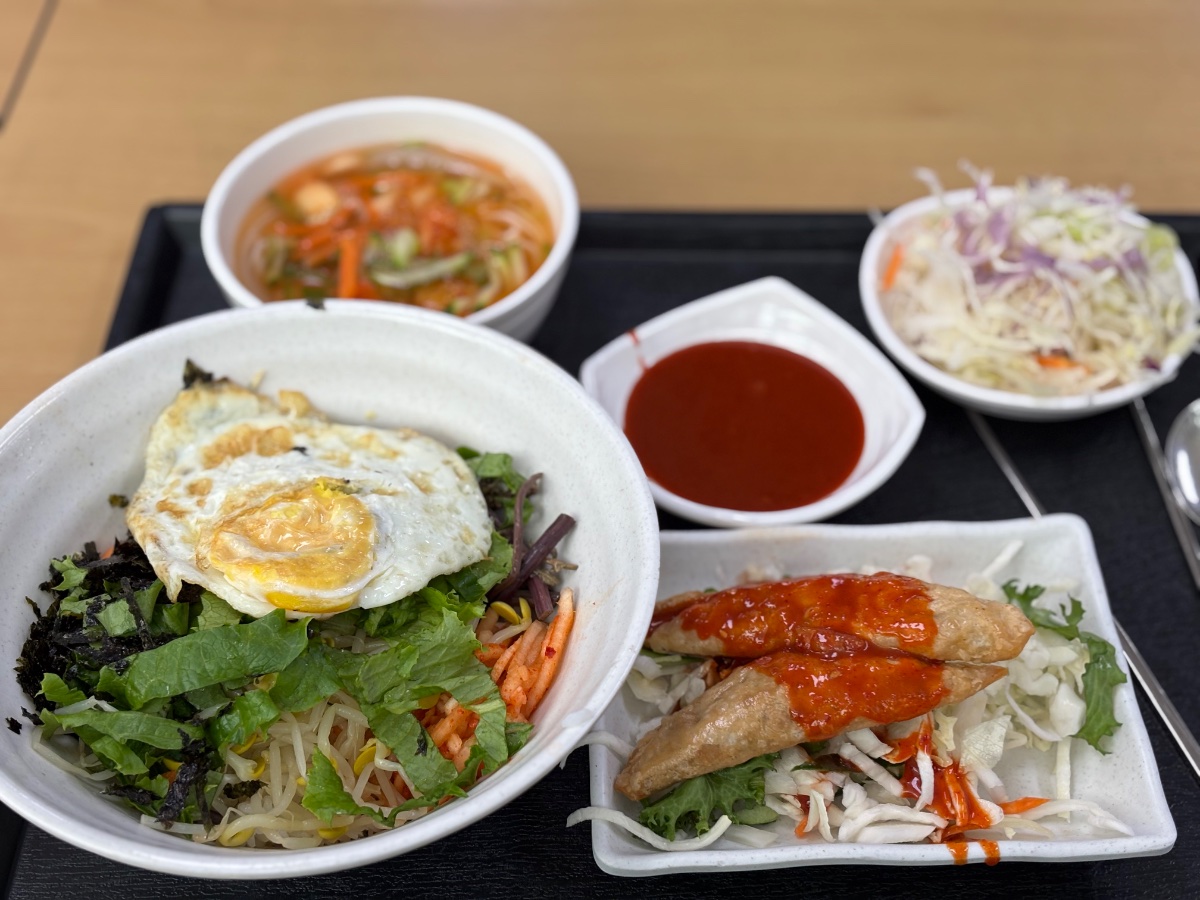
So when I see a picture captioned simply “Hospital food,” my mind braces for the worst. I’m picturing mush. I’m picturing sadness in a bowl. But then the image loads, and I have to blink. Because this is not a meal of surrender. This is, against all odds, a meal that looks like it’s having a pretty good day.
Here, on a standard-issue black tray, is a quiet riot of color and care. The star of the show is a big, welcoming bowl of bibimbap, the Korean mixed-rice dish that is essentially a party you get to assemble yourself. It’s crowned with a perfectly fried egg, its edges just a little crisp, its yolk glowing like a tiny, captured sun. This isn’t just an egg; it's a sunny-side-up wink, a promise that good things are about to happen. Beneath it, a landscape of shredded lettuce, seasoned bean sprouts, vibrant carrots, and dark strips of toasted seaweed. It’s a still life of good intentions.
This is food that requires participation. You don’t just passively consume it; you get to orchestrate it. That little dish of bright red gochujang isn't just a condiment; it’s the conductor’s baton. You add a dollop, you grab your spoon, and you mix. You turn the separate, well-behaved ingredients into a glorious, unified mess of flavor and texture. It’s an act of creation, a small moment of control in a place where you often have very little.
And it doesn’t stop there. A great meal, even on a hospital tray, understands the importance of a supporting cast. To the side sits a small plate with two golden-fried fish cakes, slicked with a sweet and spicy sauce, resting on a bed of shredded cabbage. They look impossibly crisp. There’s a bowl of what looks like a light kimchi noodle soup, cutting through the richness with its tangy warmth. And a tiny dish of fresh slaw, adding a cool, clean crunch.
This isn’t just a random collection of items. It’s a composition. Each element has a role: the savory, the spicy, the fresh, the comforting. It’s a meal built on the principle of balance, the same principle a doctor might use to prescribe treatment. It seems to say, We’re not just trying to keep you alive; we’re trying to make you feel good. This is a tray that respects the palate. It respects the patient. It’s a far cry from a lone cup of lime Jell-O.
There’s a profound sort of kindness in this meal. Someone in a busy, sterile kitchen decided not to phone it in. They fried that egg just right. They arranged the vegetables with an eye for color. They understood that healing isn’t just about medicine and machines. Sometimes, it’s about the simple, profound dignity of a good lunch. It’s about being offered something that wasn't just made, but crafted.
This tray of hospital food dismantles my cynical expectations. It’s a reminder that care can show up in the most humble, unexpected forms. It’s not a grand bouquet of flowers or a heartfelt speech. It’s a bowl of rice and vegetables, a perfectly fried egg, and the quiet invitation to mix it all up and make it your own. It’s a small, edible prescription for joy.